BACK TO WORK
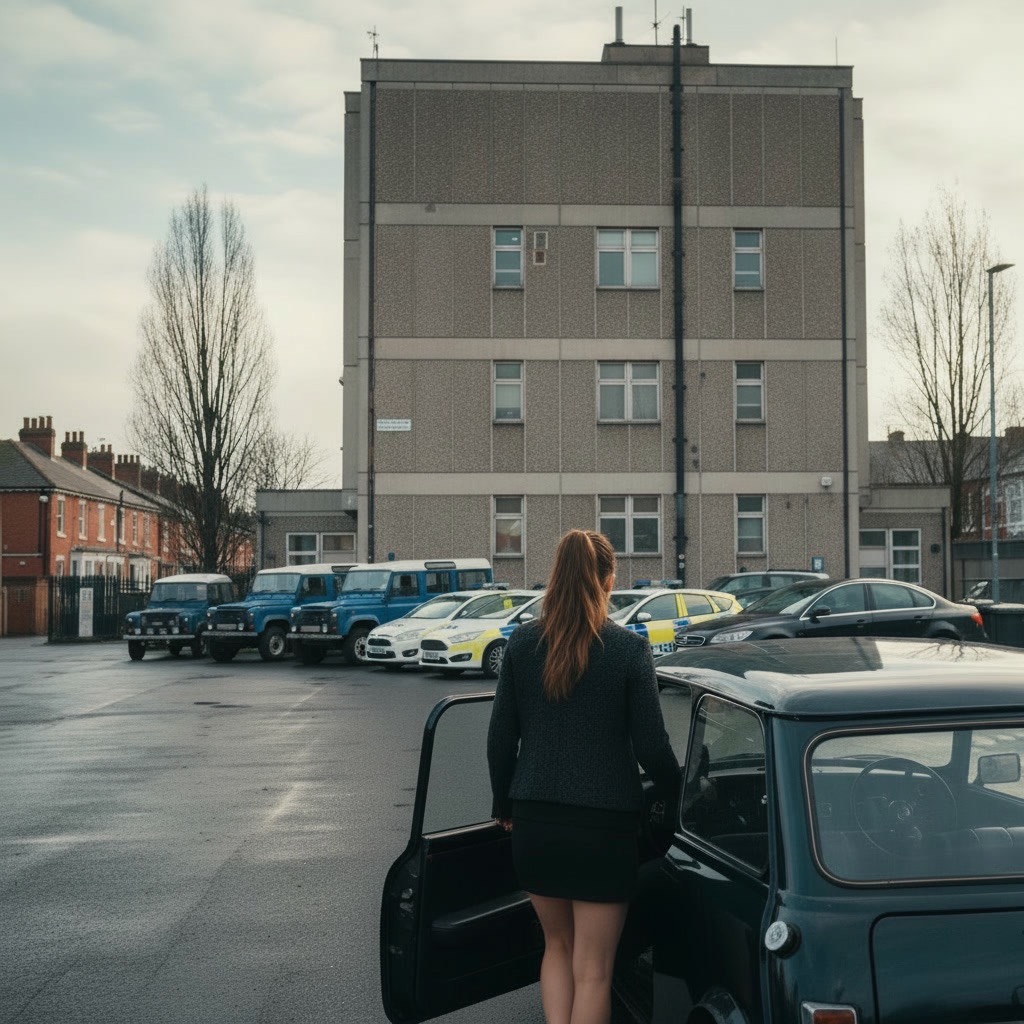
The drive to work was a purification. The car—a battered Mini Cooper with hairline cracks radiating from the edges of the windscreen—functioned as a kind of mobile airlock, a membrane separating her private night world from the public rituals of the day. She never listened to music in the mornings, preferring instead the controlled astringency of audiobooks. Lately she’d been cycling through police procedurals: a litany of small-town murders and world-weary detectives, their tidy resolutions as comforting as the heat from the car’s ancient vents. She could predict the culprit by the third chapter and sometimes found herself mentally rewriting the crime scenes, annotating the author’s mistakes, cataloguing the lazy patterns.

Today the voice in her ear was a woman—northern accent, crisp, an undertone of impatience in every vowel. The book’s hero, a recently divorced DCI with a penchant for lurid metaphors, was currently standing in a kitchen examining a blood pattern on a laminate floor. She tuned it out after the first few sentences; the reality was rarely so neat, and anyway, she was more interested in the tangibility of the steering wheel, the way the frost had left veins along the hedges, the way the low sun blurred the horizon into an endless, surgical white.
At the roundabout, she found herself thinking about Gary—not the man himself, but the aftermath, the way he’d gone so limp, as if the simple act of being seen by her had rendered everything else unnecessary. She’d felt no remorse. That was the part people never understood. Not a lack of empathy, but a lack of shared language for what this was. Some people needed to test boundaries in order to feel real; others were content to be shaped by the force of another’s will. Gary had always wanted to be told what to do. All his bravado on the forums, his showy arguments about rules, his obsession with miniature worlds—it was all the posture of someone desperate to be possessed by a stronger gravity. She’d provided it. Simple as that.
She pulled onto the bypass, the car trembling as it picked up speed, and let her thoughts drift back to the first time she’d truly noticed this tendency in herself. That was years ago, before university, before the persona of self-sufficiency had hardened into habit. It was at St Teresa’s, the boarding school, in the long shadowed corridor outside the sports block. The details came back with photographic clarity: the damp wool of her uniform, the chemical tang of industrial floor cleaner, the way sunlight carved the world into binaries of seen and unseen. There had been a girl, Victoria, a year older, who’d set out to bully her. She had searched for her and was now towering over her about to demand money and “tributes”.
She had responded with a single sentence.
She remembered the look Victoria’s eyes—no fear, just confusion, like a kitten being held by the scruff for the first time.
While Victoria still reeled in shock, she had explained in slow, quiet words how the world was full of hidden things, how some people were made for collecting secrets, and how others existed only to be used and then discarded. The next day, Victoria had gone to the nurse, transferred to a different student block and never spoken to Julia again. A clean break, a neat incision.
Now, as she neared the office, she felt that same internal clarity, the hush that followed a successful operation. She parked, checked her face in the rearview (eyes a little red, but that could pass for allergies), and applied the minimal makeup required for plausible normalcy. She shouldered her bag and walked toward the entrance, counting the familiar landmarks: the scuffed step by the fire door, the rusty patch on the bin, the slanted shadow of the security lamp on the brick. It was all as she’d left it.
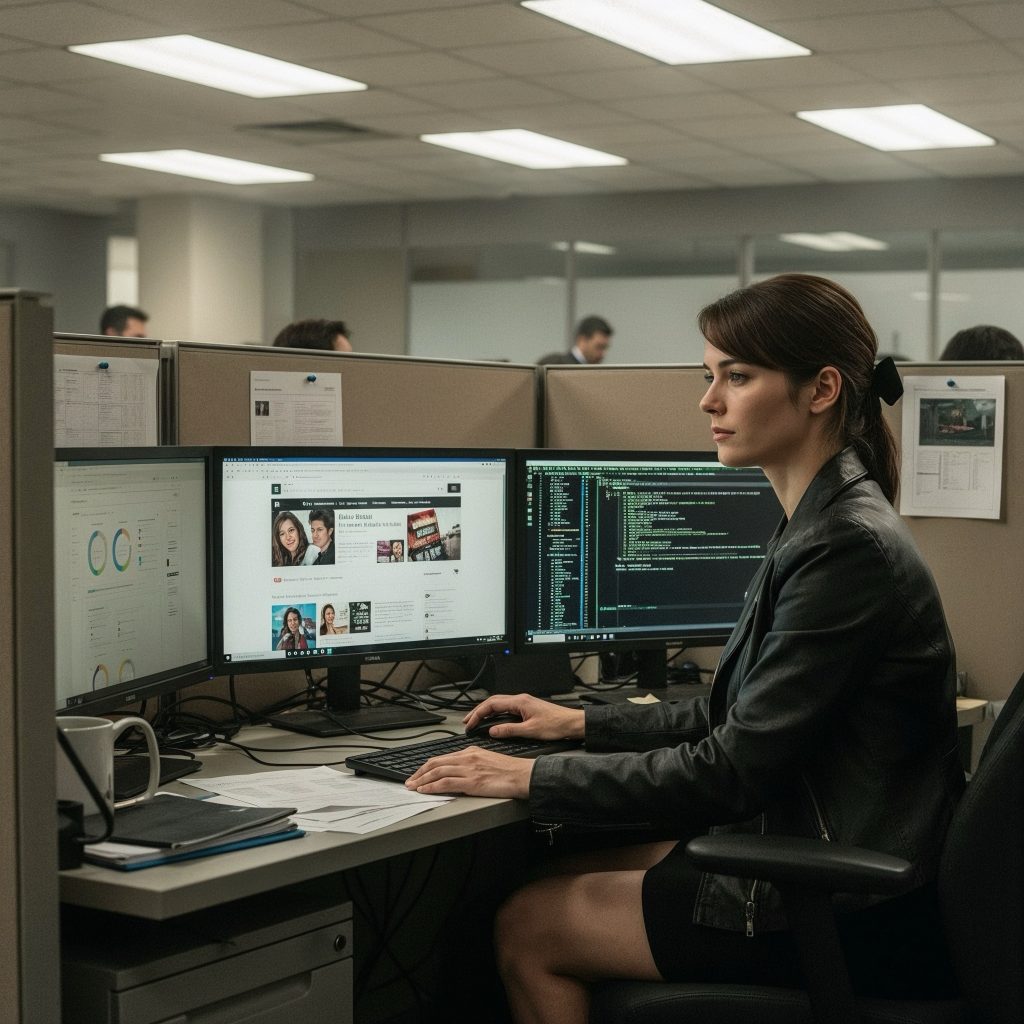
Inside, the corridors hummed with pre-9 a.m. energy—phones already ringing, the air thick with instant coffee and unresolved tension. Julia slipped into her cubicle, hung her coat, and logged in. The first emails were already waiting: requests for information, invitations to meetings, a passive-aggressive note from the facilities manager about fridge etiquette. She replied to each with the proper mixture of efficiency and inoffensiveness, taking care to make her answers just helpful enough to reinforce her reputation as “reliable but not a threat.”
She opened a browser tab and checked the news. There was nothing about Gary, of course. She’d left the body in such a way that the process would take time, maybe years before it was discovered, if ever. The real challenge wasn’t in the act itself but in the waiting afterward: keeping her affect flat, monitoring the drip of information, being prepared to act if something went awry. She never took trophies—too obvious—but she allowed herself the occasional small indulgence. This time it was the memory of his breathless, wide-eyed confusion, the certainty that he was finally the protagonist of his own story.
A knock at the cubicle wall.
She turned to see her manager— David, today in his “Tuesday shirt,” a blue check pattern that made him look like a cartoon farmer.
“Morning. How’s the evidence in the Henderson case going?”
She forced the proper smile. “On track. I sent you the update last night.”
He grunted, pleased, and moved on. She watched him go, thinking how little he would understand, how utterly predictable his own secrets were. His online gambling. His interest in fetish sites.
She turned back to her screen and glanced at the task list. A dozen small fires to put out before lunch, a client call at eleven, and, if she was careful, at least an hour free to begin the next phase of her plan.
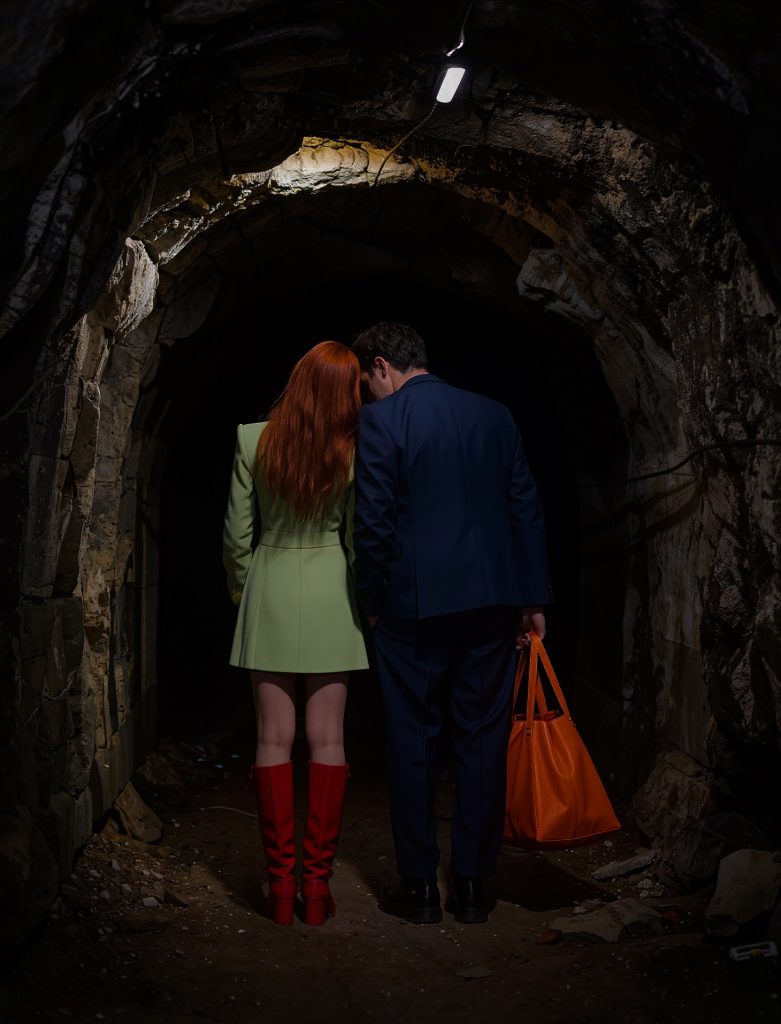
She thought of the old tunnel, the body cooling in the deep dark shaft, the way the mist had closed behind her like the cover of a book. She thought of St Teresa’s and the lessons she’d learned there.
She wondered, not for the first time, whether any of this could be traced back to a single moment—a choice, a crossroads, a point at which the outcome was still in doubt.
She doubted it.
But she liked to imagine otherwise. Thinking about Victoria in the car had sparked her memory and with nothing challenging to do she thought back to when it had all begun.