
St Teresa's School


The second week calcified everything: the rituals of motion, the ways to avoid eye contact in stairwells, the lines of demarcation between the blocks of girls who, even at fifteen, had decided the world was best managed by division and rumor. Julia learned to walk with her head at a vector that discouraged approach—chin lowered, gaze unfocused but always working the periphery. To most, she registered as harmless background: a blur of mousy hair and too-long sleeves, a whisper of footsteps that left no impression in the carpet pile.
Classes bled into one another, a soup of vowels and the click of pen caps, punctuated only by the slow-burning dread that built before each lesson. History: the teacher who sweat through his shirts and stuttered when reading girls’ names from the register. Biology: Helena’s lab partner, who refused to share the pipette and spent the whole hour drawing cocks on the paper towel dispenser. English: Victoria, in her element, bending the discussion at will, drawing laughter with calculated asides that always landed just short of cruelty.
Computer Science was different. Julia could feel her skin loosen as she entered the lab, could feel the temperature gradient of anxiety slip back a degree or two. The room was a relic, donated by a parent who ran some Midlands data center; not quite beige plastic and CRTs but old. The air tinged with the smell of melted solder and compressed air. The teacher, Ms. Jordan, was young and obviously nervous—a temporary teacher, maybe, or someone covering for maternity leave—but her nervousness was of a kind Julia recognized: the tension of a person hiding something, always waiting for someone to notice the flaw in their disguise.
The syllabus was pathetic. The first lesson had been “How to Open a Spreadsheet.” Julia had run Excel on her mother’s ancient PC when she was six. By the end of the first session, she’d already figured out the local admin credentials for the workstations (they were, insultingly, “password1” and “admin123”). By the end of the third, she’d set up a partition on her machine, a little slice of privacy that nobody else could see.
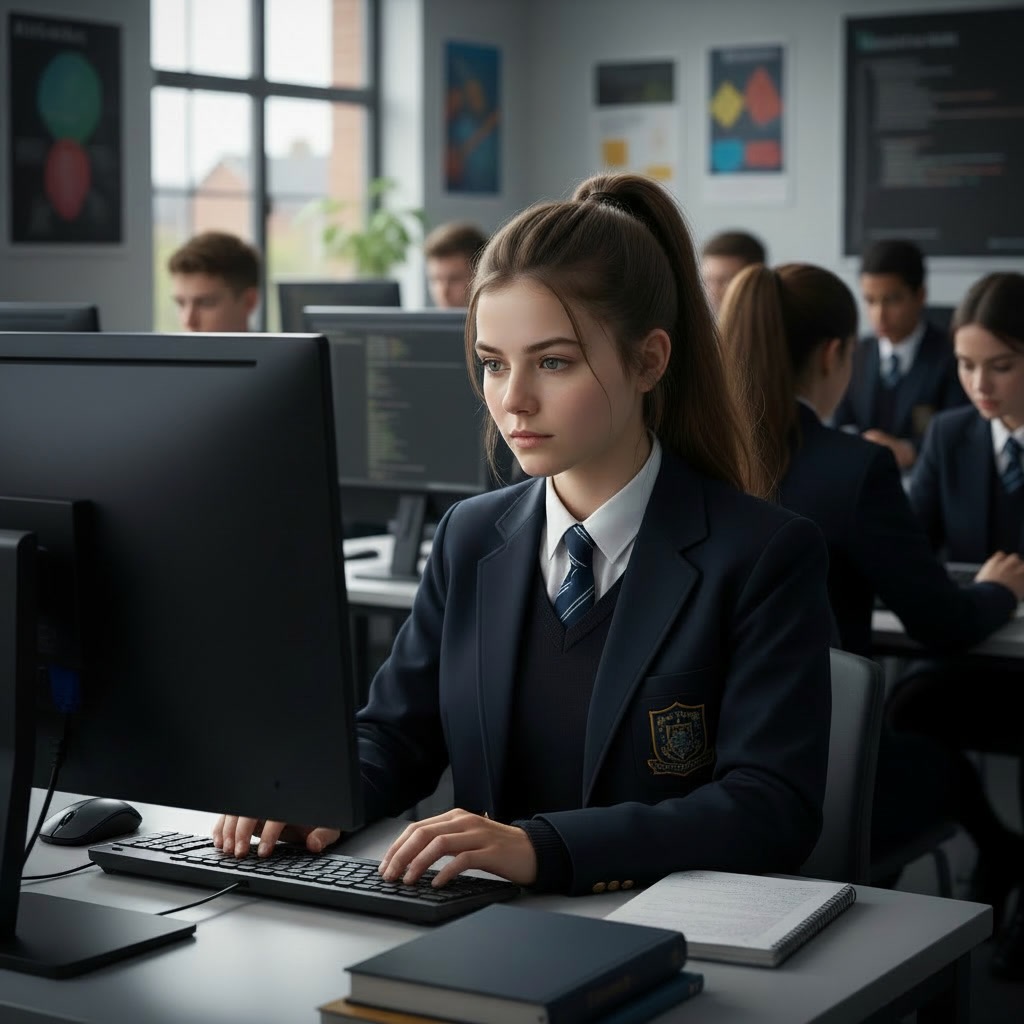
She kept her head down, never raising her hand, never volunteering an answer unless directly called. She taught herself to type slowly, so that she stayed in tune with the rest of the group. Ms. Jordan sometimes tried to draw her out, mistaking her silence for uncertainty, but Julia would respond with a careful stammer, eyes fixed on the desk, voice pitched just above audibility. The class’s collective gaze always slid off her like rain on glass.
Her trick was to keep a work window open—a Word document or a prescribed website—while, in a hidden instance below, she ran her real work. At first she’d just explored the shared drive, poking through the folders of past years’ coursework, the recycled lesson plans, the digital detritus of generations of girls who’d passed through and never bothered to delete anything. Then, with careful method, she started mapping the school’s network. It was a hobby, at first. But then it became a compulsion.
Each user had a pattern: Victoria, despite her effortless surface, checked the gossip blog five times a day and maintained a surreptitious second email account for “private” correspondence. Helena’s browsing was 90% fanfic, 10% Amazon wishlists of piercings and band merch. Ms. Jordan’s history was a tragic carousel of dating sites and “am I a good teacher?” queries.
The system was locked down tighter at the staff level, but even then, Julia found ways to watch. She learned that every night at 11:17, the backup job pushed a copy of the entire student database to a shadow server that was, technically, outside the school’s firewall. She had to access the physical server and that was in a locked room off the main computer room.
She tried to think of a way to access this treasure and spent lots of time in the lesson thinking of how she might accomplish this feat.
Victoria noticed, once. During a rare group project, she looked over Julia’s shoulder and frowned. “You’re, like, a tech whiz, aren’t you?”
Julia shrugged, hiding the panic in her stomach. “Not really. My mum works with computers.”
“Does she hack stuff?” Helena, from the other side of the desk, perked up. “Like, for the government?”
“No. She just makes websites.” Julia kept her eyes on the monitor, minimizing her real work. “I’m not as good as her.”
Victoria said, “You don’t have to pretend with me.” She smiled, but there was a gleam of competitiveness in her eyes, the kind that looked for cracks. “Anyway, I’ll just copy yours at the end.”
Julia nodded, let them believe whatever they wanted.
At night, back in the room, she’d lie awake in the darkness, the din of Malvern block subsiding to the susurrus of snoring and surreptitious phones. She could hear Victoria’s breathing, steady and untroubled, the shifting of covers as she turned in her sleep. Sometimes, Julia watched her from the thin beam of the corridor light, noting the relaxed set of her jaw, the way she would murmur into her pillow like a child.
She wondered if Victoria dreamed about control, about the sensation of moving the world to her will. She wondered if she’d ever known what it felt like to be locked out, to be denied.
The thought filled her with a strange mix of pity and contempt.
The next morning, Julia woke early, and made her way to the Malvern kitchen. She sat in the empty echo and ate cold cereal with slow, methodical bites. She was thinking, always, about the password, about the server, about the unsolvable. It became less about wanting access and more about refusing to let the world keep a single secret from her.
She was so lost in thought she didn’t hear Victoria enter until she was standing next to her.
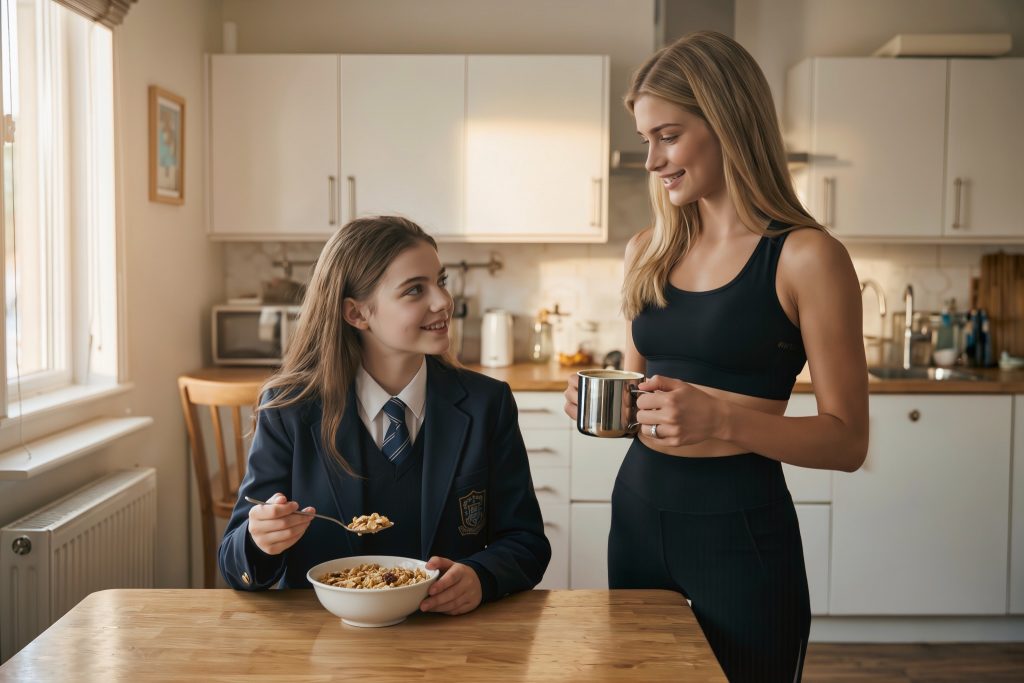
“You’re up early,” Victoria said, voice hoarse from sleep but with a smile that was nearly genuine. “Insomnia?”
Julia shook her head. “Just hungry, I guess.”
Victoria poured herself a coffee—black, no sugar. She considered Julia for a moment, then said, “You know, people are starting to notice. That you’re different.”
Julia held her gaze. “Is that bad?”
Victoria shrugged. “Not bad. Just… unusual. Girls who come in late usually either burn out or fade away. You haven’t done either.”
Julia wasn’t sure if it was a compliment or a warning.
Victoria leaned in, elbows on the table. “If you want to make it here, you need to pick a side. People like confidence.”
Julia said nothing. The silence stretched.
“Anyway,” Victoria said, standing, “I’m off to get a run in before classes. See you in English?”
Julia nodded, watched her go.
She finished her cereal and, when no one was looking, pocketed the spoon.
In the next computer science lesson, Julia waited until Ms. Jordan was helping the twins in the front row. Then, quick and practiced, she fished the spoon from her bag and slipped it into the lock on the server closet. It bent, but didn’t break. After three tries, the latch gave and the door swung inward with a mechanical sigh.
She slid inside. The hum of the machines was overwhelming, a white-noise roar that made the space feel holy and forbidden.
The admin box was there, humming in the rack. She tried the usual credentials: nothing. She tried a few different combinations but still without luck. But interestingly, the system did not lock out access to the blue password box. That was hopeful at least.
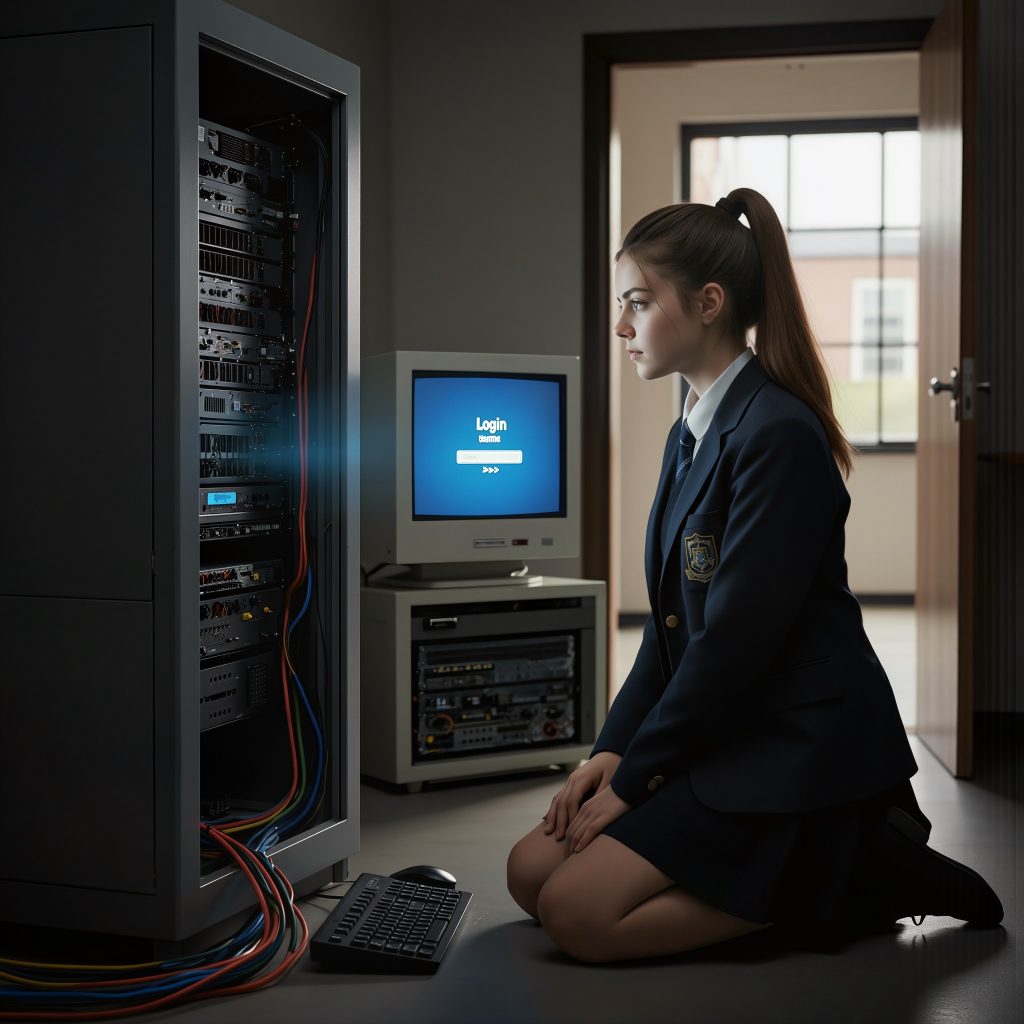
She needed to find a way into the system. But then she thought of her appointment after the weekend with Miss Milne the Headteacher.
Her official “How are you settling in” chat offered to all “new” students. Part of a dull routine but then again, she thought. smiling to herself she could turn it into an opportunity?