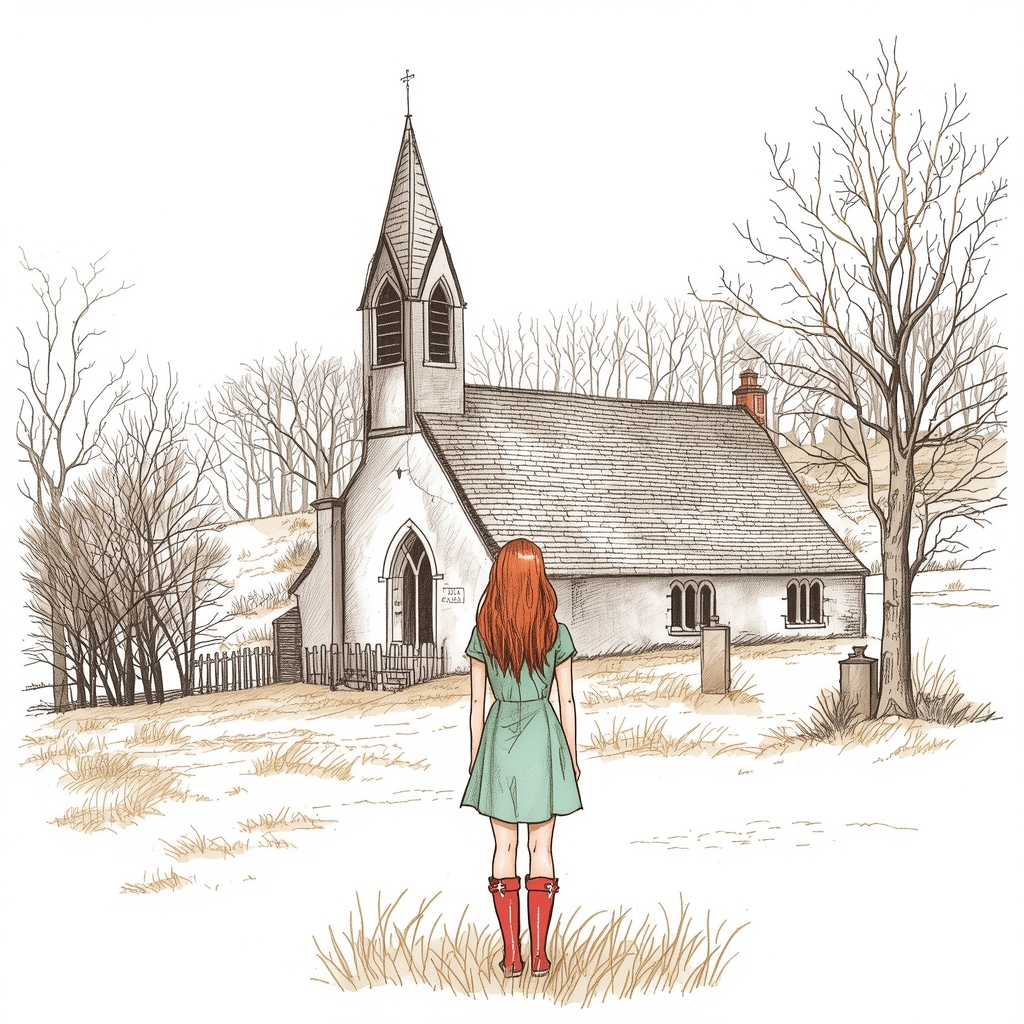
NUMBER THREE GARY
In fact he had seen her online for nearly a month before the first in-person meeting, and he’d studied the profile with an obsessiveness that embarrassed even him. It had started as a dare, really—a sort of ritual humiliation in the forums, the way the regulars encouraged each other to try out “real world interactions” as if they were play-testing some new scenario module. He’d spent days composing and revising the perfect opener, something that would stand out in the blur of DMs, and it must have worked, because she’d answered within an hour. The next days were a headlong dive through the digital courtship: equal parts measured conversation and tense waiting for her reply, watching the ellipsis blink and vanish, then reappear. And then she’d asked to meet.
He’d nearly called it off three times before actually getting on the train. It wasn’t even nerves so much as the certainty that she’d be disappointed, that something about his in-person self would register as a category error and she’d quietly withdraw, leaving him adrift in whatever provincial coffee shop she’d chosen. But there she’d been, punctual and more attractive than the filtered photos, and they’d talked for two hours without any of the expected deathly silences. She’d laughed at his jokes, though sometimes with the arch amusement of someone cataloguing specimens, and she’d seemed genuinely interested when he explained his latest campaign design. He’d left the cafe giddy and confused, convinced that something—maybe the quiet desperation in his eyes, maybe his encyclopedic knowledge of Barrowmaze lore—had actually worked in his favor.
The invitation to see the country churchyard had felt like a test, a deliberate escalation, but he’d accepted with the logic of someone who’d already spent years being tested and had nothing to lose. He’d assumed it would be a brief walk, maybe a few awkward minutes of squinting at mossy gravestones before she ghosted him with polite finality. Instead, she’d led him past the church, through a thicket of yew trees, down into a hollow thick with mist and the muffled drip of rain from unseen branches. She’d walked ahead, silent but not unfriendly, until they reached the stone stile at the field’s edge and she’d stopped, turned to him, and smiled.
And then everything had gone off-script.
First there was the sudden, childish panic—the realization that he was absolutely alone, several kilometers from anything familiar, with a woman he barely knew and couldn’t quite read. The look in her eyes had changed: not predatory, exactly, but avid, as if she’d found a new game and was delighted by its rules. Then she’d said something—he couldn’t remember what, only that her tone was different—and when he’d tried to match her mood, he’d fumbled, and she’d laughed, and then she’d turned and sprinted across the field, looking back to make sure he followed.
Which of course he had, because to do otherwise would have been to fail the test, to admit that he was, as suspected, a coward.
But now, as he crashed through another hedgerow and stumbled into a tangle of wet nettles, it occurred to him that he might actually be in danger.
The mist was everywhere, an animal thing, pressing up from the ground and roiling against the lamplight from the distant lane. He could hear her running just ahead—her footfalls light, playful—but the way the sound shifted, doubling back, always just at the edge of hearing, made his skin crawl. At intervals she’d call out, a single word or syllable, and he couldn’t tell if it was a command or a challenge or just a taunt.
He called her name—“Sarah?”—but the word vanished into the fog, or maybe she just chose not to answer.
Instead: silence.
He pressed forward, through what felt like someone else’s dream of rural England—fields sloping upward, every step mired in mud and the memory of footsteps, the occasional shape of a fallen branch rearing up like some cryptid. Once he nearly fell, catching himself on a fencepost slick with moss, and for a moment he thought about just stopping. He could explain it later, say he’d lost her, blame the visibility, maybe get a sympathetic reply and a promise to try again. But he kept moving, because there was a logic to the pursuit now and he didn’t know how to break it.
He reached the top of the rise and there she was, maybe twenty meters ahead, poised at the edge of another copse. She didn’t move, just watched him, head slightly tilted as if evaluating a solution. He tried to wave, to say something lighthearted—“You win, okay?”—but she stepped into the trees and was gone.
He followed. Not because he wanted to, but because he couldn’t imagine what would happen if he didn’t.
The woods were older than the rest of the landscape, with trunks so thick he’d have to turn sideways to squeeze between them. The mist was less a presence here than a condition—something in the bark, the roots, the black soil that drank sound and reflected nothing back. He slowed, listening, every sense alert to some hint of her path. But all he heard was the liquid rush of his own breath and, somewhere ahead, the faint click of a stone on stone.
He tried to call her name again, softer this time, but his tongue felt swollen and unresponsive.
A shape moved to his right—an animal? A trick of the fog.
Then a noise. A rumble. He froze looking frantically to his left. It was coming from below him in the gloom. He crouched down as the sound resounded through the mist and branches below him. Then lights
broke through the stillness. On the road below the car changed gear as it climbed the valley road.
He pressed on. The ground sloped downward, narrowing into a channel carved by centuries of runoff. He thought about the old stories—miners trapped underground, forbidden tunnels, the bones of the lost resurfacing after a hard rain—and felt the edge of panic turning into something else. Not quite fear. A kind of cold, anticipatory clarity.
He emerged from the woods into a narrow gully and saw the entrance to a tunnel—arched stone, bricked over in places, but with enough of a gap to squeeze through if one wanted to. She was there, standing in front of it, looking into the dark Her hair was wet and wild and the red boots were the only brightness in front of him. She walked towards the tunnel and then turned to look at him.
“You found me,” she said, almost whispering.
He tried to laugh, to shake off the performance, but she just watched him with that same clinical interest.
“What is this?” he asked, meaning: What are we doing? But also, What happens now?
She took a step back, until the blackness of the tunnel was a shroud behind her. “Do you want to see?”
He hesitated. This felt, suddenly, like the axis on which the rest of his life would turn—like there was a right answer and a wrong one, and he had no way of knowing which was which.
But he nodded, and stepped forward, and she turned and vanished into the dark.
He followed.
Inside, the air was still and ancient. He could feel the weight of the earth above, pressing down, and the only sound was their breathing, out of sync but close enough to suggest intimacy. She moved confidently, even in the dark, and he could only orient himself by the shape of her silhouette ahead.
The tunnel narrowed and widened, sometimes requiring a stoop, sometimes opening into chambers with walls wet and sparkling. In places the floor was slick with mud, and once he nearly lost his footing, catching himself on a cold, unseen protrusion. She did not offer a hand or look back.
Eventually she stopped. He was close enough to see the outline of her shoulders, the curve of her neck as she turned slightly toward him. And the red of her hair and boots.
“You know what happens next?” she asked, voice flat and uninflected.
He said nothing, because he did not.
She stepped closer. For the first time he could see her eyes, reflective and bottomless in the dark.
“Why did you follow me?” she asked.
He started to answer, but the words tangled. He wanted to say: Because I thought you wanted me to. Because I have always been the one who follows, never the one who leads. Because you made me feel visible for the first time in years, and I wanted more of that, even if it cost me everything”.
She turned, reached up and touched his face, her hand cold and deliberate. She had something in her hand.
“It’s okay,” she said, as if to a child.
He didn’t pull away. He just closed his eyes. There was nothing else to do.
When the pain came, it was less than he’d imagined, more a displacement, a loss of boundary than an injury. He felt himself collapse inward, like the old tunnel finally giving up its shape.
He thought, fleetingly, of all the things he would never finish: the miniature armies half-painted on his desk, the campaign notes left unsorted, the private hope that one day someone would choose him not as a last resort but as a first option.
He thought of her, and wondered whether she would remember his name.
He doubted it.