They summoned her to the headmistress’s office in the dead center of the third week. Julia knew enough by then to treat every summons as an event—nothing at this school was ever accidental, and each movement of students from one corridor to another was tracked and cross-referenced like a laboratory maze.
She arrived five minutes early, as expected, and found the antechamber deserted except for a secretary whose principal function seemed to be not seeing children. The double doors to Miss Milne’s sanctum were closed, opaque glass etched with the school’s Latin motto (“In Veritate, Virtus”—a phrase Julia had already mentally rewritten half a dozen times). She stood in the hush, counting the faint hums of the fluorescent light above, and rehearsed her lines.
The secretary, in time, gestured without looking up. “You can go in.”
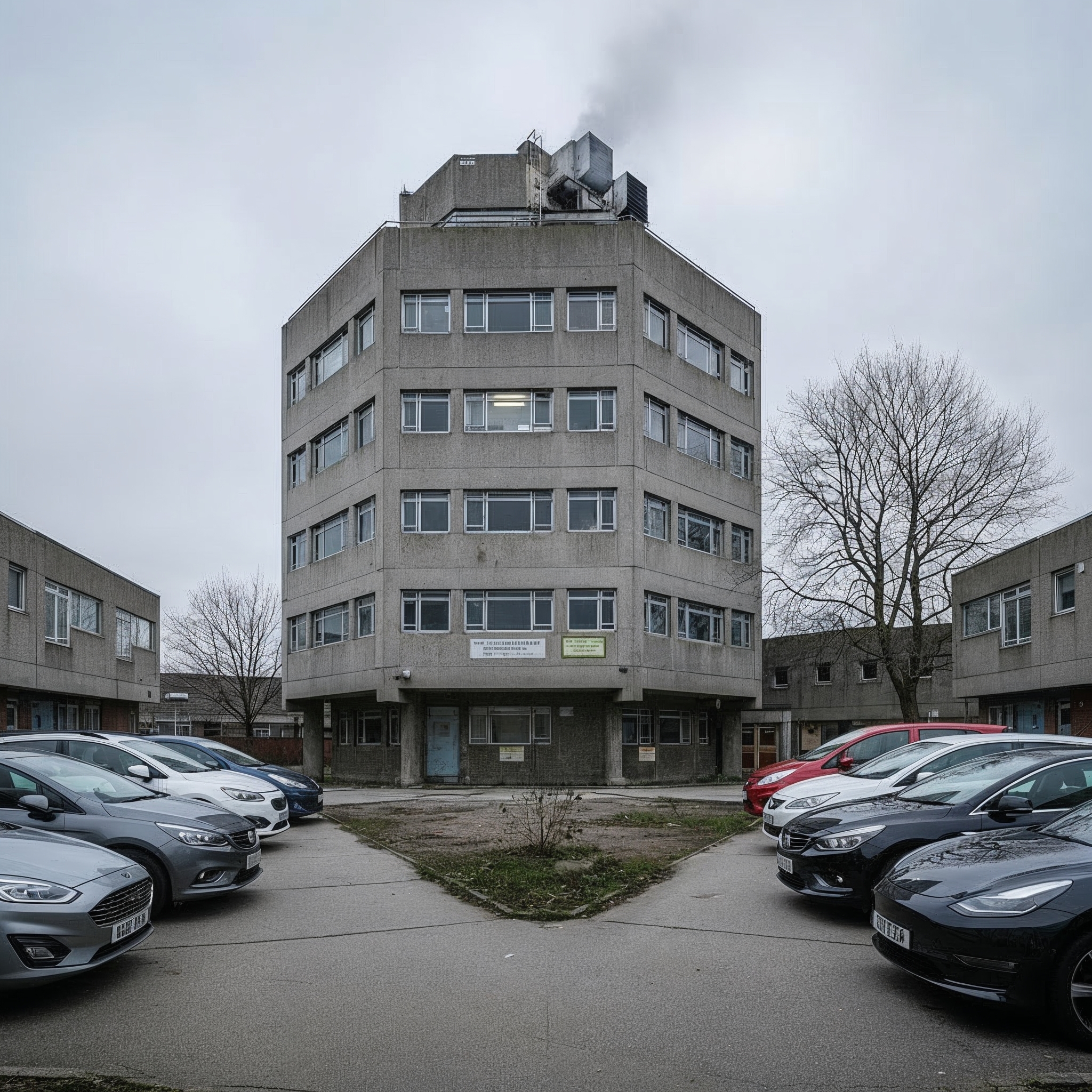
Miss Milne’s office was a study in imposed order: shelves arranged by the colors of their bindings, desk bare but for a blotter and an antique brass paperweight in the shape of an owl. The windows were high and grimy, filtering daylight into a hard, white dazzle. Julia had seen Milne only in passing, but up close she was more angular, her skin stretched taut over the bones of her face, every gesture precise.

“Miss Holloway,” Milne said, standing to shake hands. Her grip was papery but strong. “Please. Sit.”
Julia did, perching on the edge of the chair, the way she’d seen it done on documentaries about job interviews.
Milne considered her for a long beat. “How are you finding St Teresa’s so far?”
Julia marshaled her response, recalling Eleanor’s advice: give them what they expect, but not too much. “It’s different than my last school,” she said. “It’s more… organized. People know their place.”
“Do you?” Milne asked, tilting her head.
“Yes.”
“Good. That’s essential, here.” Milne leaned back, steepling her fingers. “But I also notice you haven’t made any significant friends yet.”
Julia shrugged. “People are kind. It takes me longer.”
Milne nodded, as if to herself. “Sometimes it’s the quiet ones who end up making the biggest impact. I remember your grandmother, you know. She was a force of nature. Quite intimidating, in her way. Your mother, too, but less so.”
Julia said nothing, not trusting her voice to hide the sting of comparison.
Milne’s eyes narrowed. “I’ve reviewed your file. Your marks are more than satisfactory, and your teachers have only positive things to say. But I’m told you had… difficulty, at your last school?”
“Some. My mother thought it best I start somewhere new.”
“Is your mother ever in touch?” Milne asked, but her tone suggested the answer was already known.
“She’s busy,” Julia said, keeping her eyes on the owl.
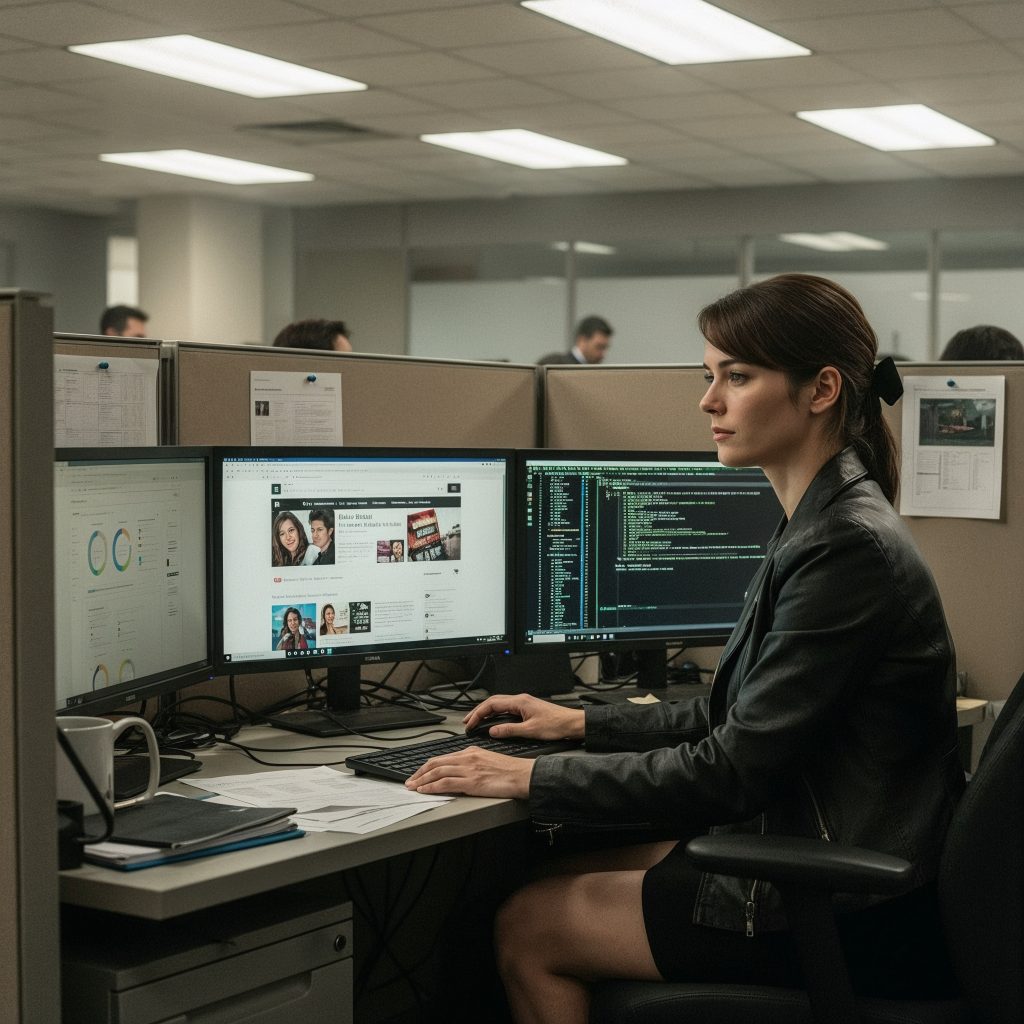
Milne softened, just for a moment. “It can be difficult, when parents are—absent. But we’re here to support you.” She rose and crossed to the file cabinet, extracting a folder. She read from the sheet inside, her voice flattening into professional cadence: “You have shown, in a very short time, considerable aptitude in the computer lab. Ms. Jordan says you may already be ahead of the class.”
Julia’s heart tripped. “I just practice a lot.”
“I’m glad to hear it. But, as I’m sure you’ve realized, computers are both a tool and a responsibility. Sometimes students can become… over-enthusiastic.”
Julia forced herself to look up. “I’m careful.”
Milne gave a small, tight-lipped smile. “I trust you are.” She put the folder down, smoothing it with the palm of her hand. “Is there anything you want to ask me?”
Now. The moment.
Julia drew in a breath, arranging her features into the appropriate mask of anxiety. “Actually, I’ve been feeling—dizzy, sometimes. It started last week. I didn’t want to make a fuss, but sometimes I—” she let her words falter, “—black out, a little. My mother has low blood pressure, so maybe it’s genetic.”
For the first time, Milne looked worried. She stood, came around the desk. “Are you feeling faint now?”
Julia nodded, timing her blinks to look unfocused.
Milne touched her shoulder. “Wait here. I’ll fetch the nurse.”
As soon as the door closed behind her, Julia moved.
She scanned the desk: nothing loose. The drawers were locked, but the left one had a key still inside, probably to enable her to open it without shuffling through her bag for keys. Julia tried it; it turned smoothly. Inside, a set of brass keys on a blue tag (“Facilities”), a small ledger with a post-it (“Network: See note in safe”), and a school laptop, screen dark but warm. She pocketed the keyring and the sticky note, then turned her attention to the safe under the bookshelf. It was a cheap model, the kind her father used to keep at the parish office for counting donations, and she recognized the type. Most default to “0000,” and if not, then “1234.”
She knelt, entered the first code. It beeped red.
“1234” beeped green, and the lock popped.
Inside: a brown envelope, labeled “Admin Access,” and a USB stick in a clear plastic bag. She took only the envelope—never greedy, never reckless—and shut the safe, re-locking it.
She had just enough time to settle back in the chair, crossing her ankles, when the door opened and Milne returned with the nurse, who smelled of menthol and wore an expression permanently set to “seen it all.”
“Miss Holloway says she’s been fainting,” Milne said.
The nurse regarded Julia with a professional blankness. “Eat breakfast today?”
“Yes,” Julia said, truthful.
“Pale,” the nurse said, pinching the skin on Julia’s hand, then glancing at the veins in her wrist. “It’s not uncommon, especially with the stress of new situations.”
“I’ll keep an eye,” Milne said. “If it gets worse, we’ll have the doctor in.”
The nurse nodded and left. Milne watched Julia for a moment, then said, “You can go now. But take it easy for the rest of the day.”
Julia stood, wobbling slightly for effect, then left.
In the corridor, she ducked into a side hallway and checked her haul. The keys were heavy—metal worn smooth at the edges—and the tag listed doors by number, many of which she recognized as offices, storage, even some of the other accommodation blocks. The sticky note read: “Network: jmilne / FALCON1965.”
The brown envelope contained three pages: a printout of all the school’s major logins, the administrator password for the core server, and a backup list of parental contacts for every student.
She exhaled, the rush of adrenaline making her hands tremble. She slipped everything into her blazer’s inside pocket, then walked, measured and calm, back to her room.
Victoria was there, painting her nails on the windowsill, foot propped up on the radiator.
“Where’d you go?” Victoria asked, not looking up.
“Headmistress wanted to check on me,” Julia said, sliding onto her bed.
Victoria sniffed, the chemical tang of polish mixing with the radiator’s metallic heat. “You’re lucky. Milne scares the crap out of most girls.”
Julia said, “She’s not so bad.”
Victoria shot her a look, one eyebrow raised. “You’re a dark horse, Holloway.”
Julia shrugged, and let the silence fill in the rest.
That night, after lights out, she lay in bed listening to the hiss of the pipes and the gentle patter of rain against the glass. She reached under her mattress and removed the keys, running her thumb over the ridges, each tooth a potential doorway.
She thought of Eleanor’s words, about wearing the face they expect, about cultivating a second life.
She understood, now, what her currency was.
She would spend it wisely.