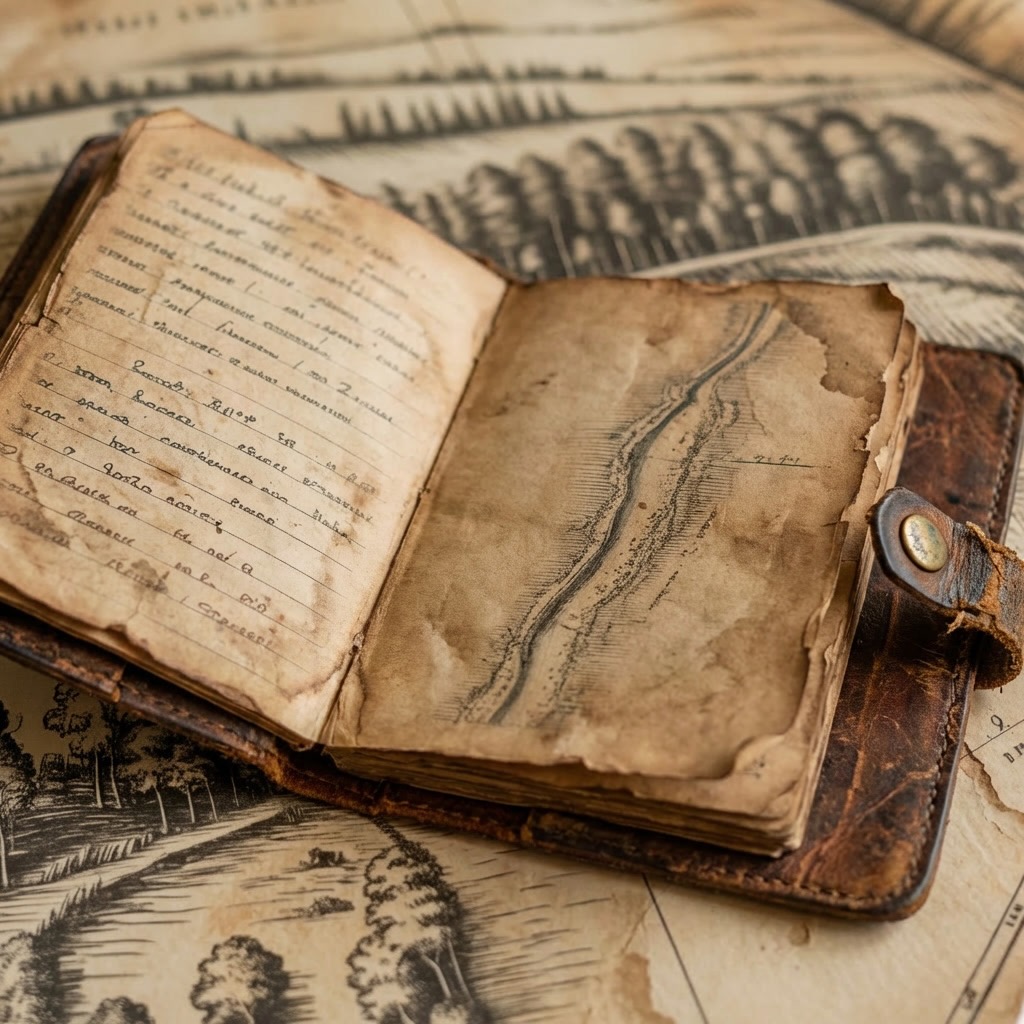
That night, after Charlotte had retired early and the house had gone to its hush of radiators and ticking pipes, Julia packed her rucksack. She moved with the quiet intensity of a professional, selecting layers for warmth, a headlamp, a folded map, a portable phone charger. She took the leather-bound notebook from her mother’s study and slipped it into the inside pocket of her jacket. She left a note on the kitchen table—“Gone for a walk, back by midnight”—in case anyone noticed her absence, though she doubted they would.
The air outside was crystalline, sharp as needles on her face. The sky had cleared to a blue-black vault pricked with stars, and the moon lit the garden in a way that made it seem foreign, the hedges crouched and hunched with shadow. Julia moved down the path and onto the lane, boots grinding on the grit they’d scattered to ward off ice.
The fields beyond the village were silvered and silent, the stubble crusted with frost. She cut through the far pasture, as described in Charlotte’s notes, ducked under the barbed wire and skirted the blackened remains of a bonfire. She moved fast, partly to stay warm, partly because the darkness felt thick with something more than cold.
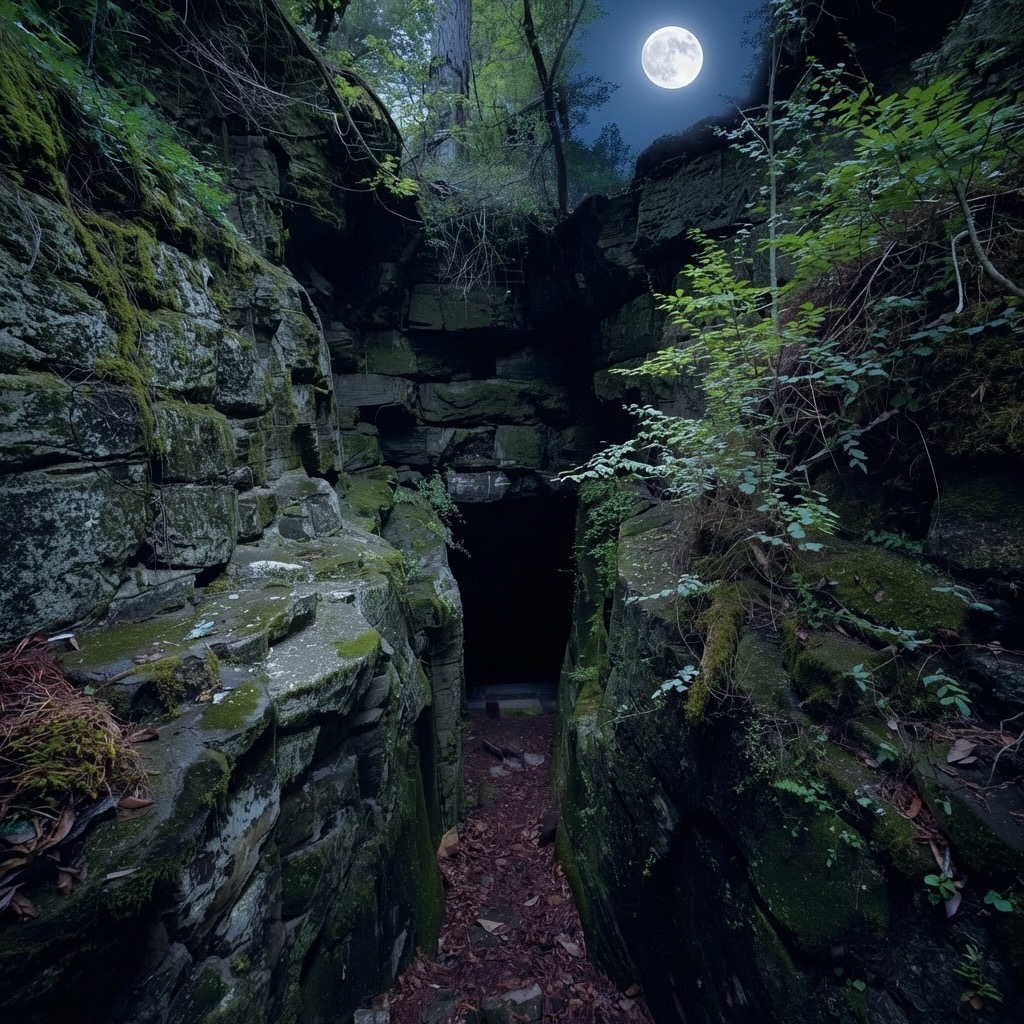
At the copse, Julia paused, consulting the map and her mother’s field sketch. She could hear the stream below in the ravine but also a depression—a bowl in the grass, rimmed with dogwood and a stand of thorn. Just as described, the ground was soft underfoot, as if it remembered a different season. She used her gloved hands to clear away a mat of dead leaves, exposing a slot of blackness in the earth. It was smaller than she’d expected—barely wide enough for a teenager, let alone a miner. As she shone her torch downwards, she could see that the slot seemed to lead below her feet.
She looked for handholds and saw that there were some rough hewn stones, as if workers had come to the surface in this remote field and tired from cutting through stone had cut rough steps to enable their escape back into the daylight. Using her torch to place her feet on the “steps” she edged her way down and saw a roughly carved opening with below an improvised stone lintel.
The opening stank faintly of old rot, but the air was dry and not as cold as the world above. She pressed her headlamp to her brow, turned it on, and watched the cone of white trace the entrance. Within a metre, the passage leveled out and the walls shivered with veins of quartz, sparkling like a promise. She crouched, careful not to disturb the brambles, and looked inside.
There were no ghosts, just a corridor fading into shadow, the packed clay scored with parallel tracks—ancient, but not erased. Julia remembered Charlotte’s words about the adit being a “ventilation shaft,” but in this context it felt like a portal to another reality, an underworld that had waited patiently for its finder. She could also see that the tunnel widened into a larger cavern which had clearly proved fruitful in the past for the walls were scarred with the impact of rudimentary tools.
She stepped back, heart thumping, and left through the opening again. She climbed the “steps” and once on the level again she surveyed the field, the dark tangle of trees, the way the horizon curved away from her and into the unknown. For a moment she was overtaken by a sense of pure, giddy accomplishment. It was not enough to have found the entrance and the first cavern. She wanted to go inside again, fully equipped to see what she could make of this secret that she was certain would prove a significant find.
She knelt, took a photo of “steps” and the entrance in the moonlight. The earth was slick, and the cold burned through her glove. She left a scuff mark as a sign at the edge of the bushes.
On the walk back, Julia replayed every step in her mind, editing and annotating the experience for future use. She wondered if Charlotte would remember this victory, or if she would have to remind her—recounting the details in the clinical, unsentimental way that seemed to soothe her mother’s anxiety.
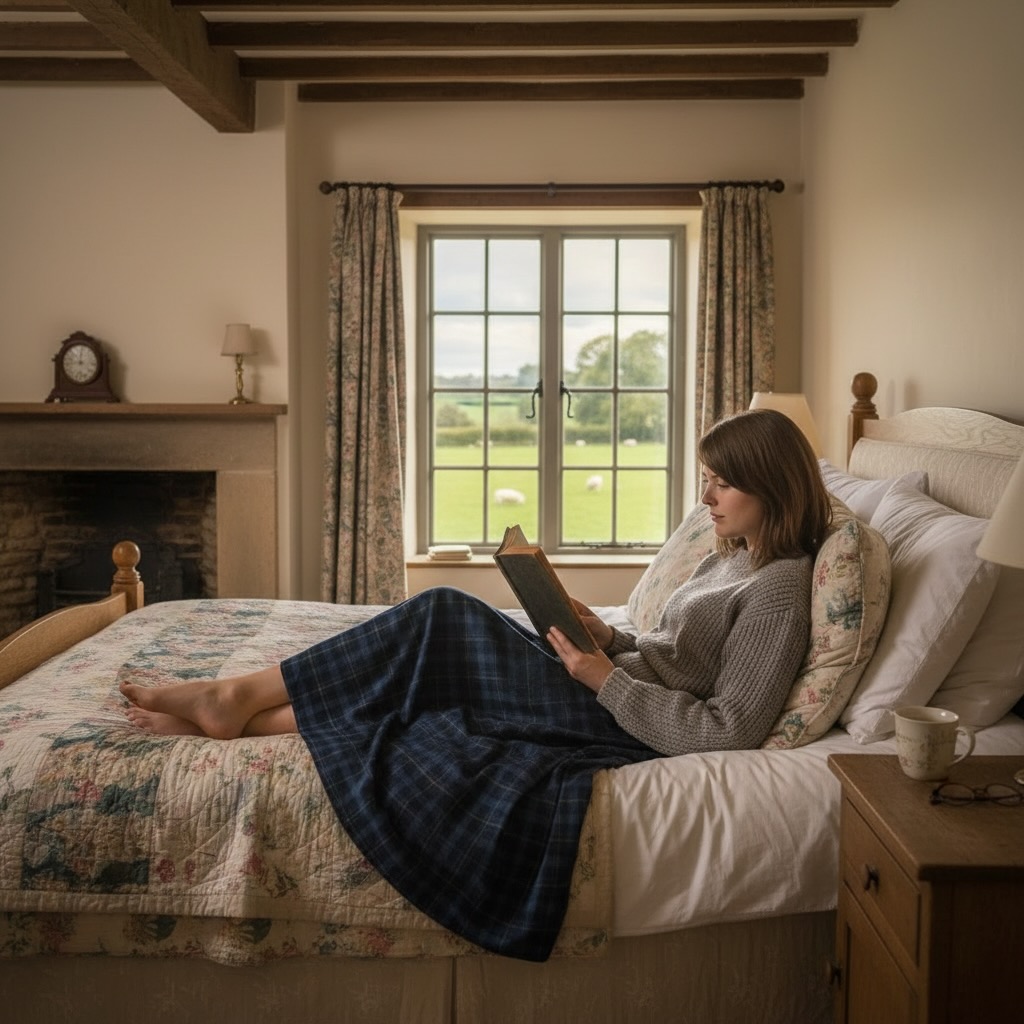
In the kitchen, the house was as she’d left it: lights low, the note still in place. Julia made a cup of tea, hands shaking only a little, then padded up to her room. She undressed and sat on the bed, the notebook open in her lap, her phone beside it displaying the image of the adit’s mouth.
She felt a new current of resolve, of continuity—hers to keep or to break.
As she turned off the lamp, the world outside the window was perfectly still, the stars unblinking.
She slept, finally, without dreams.