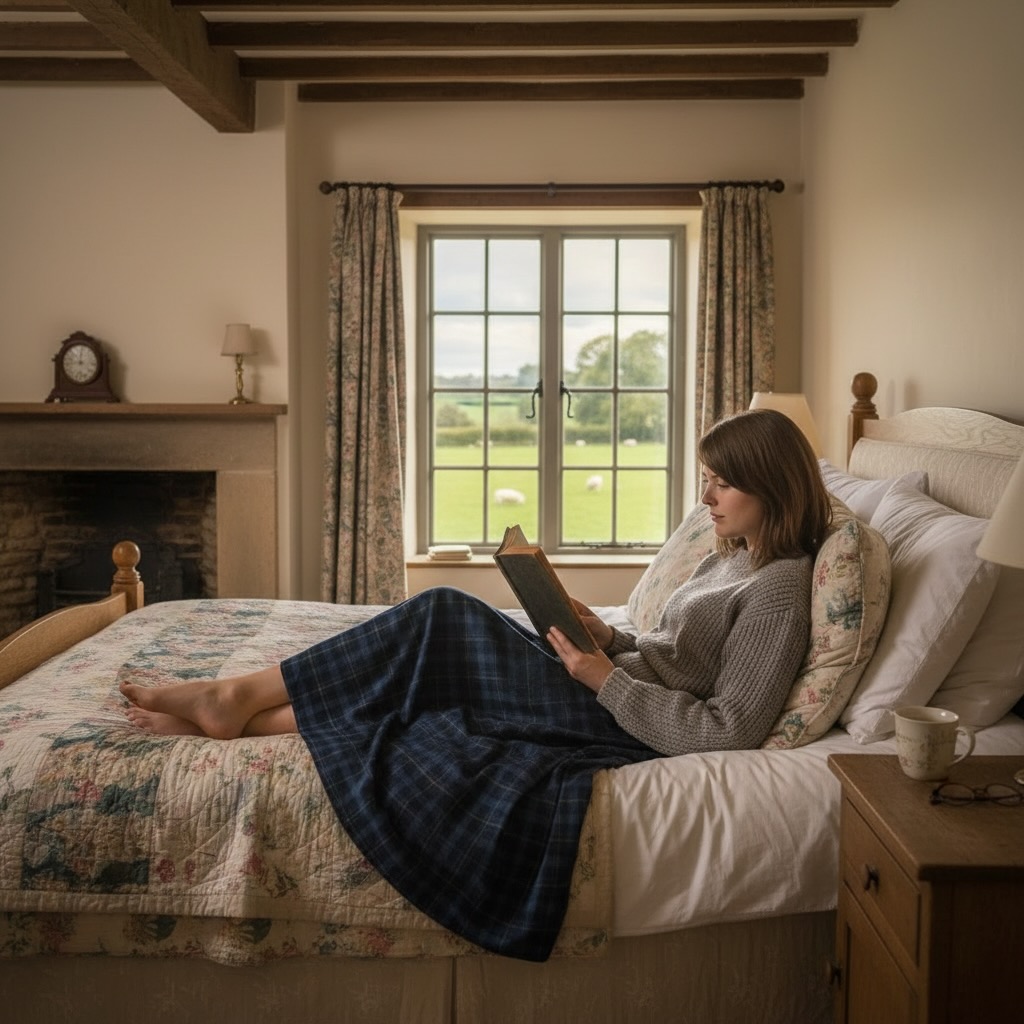
Hillside Haven

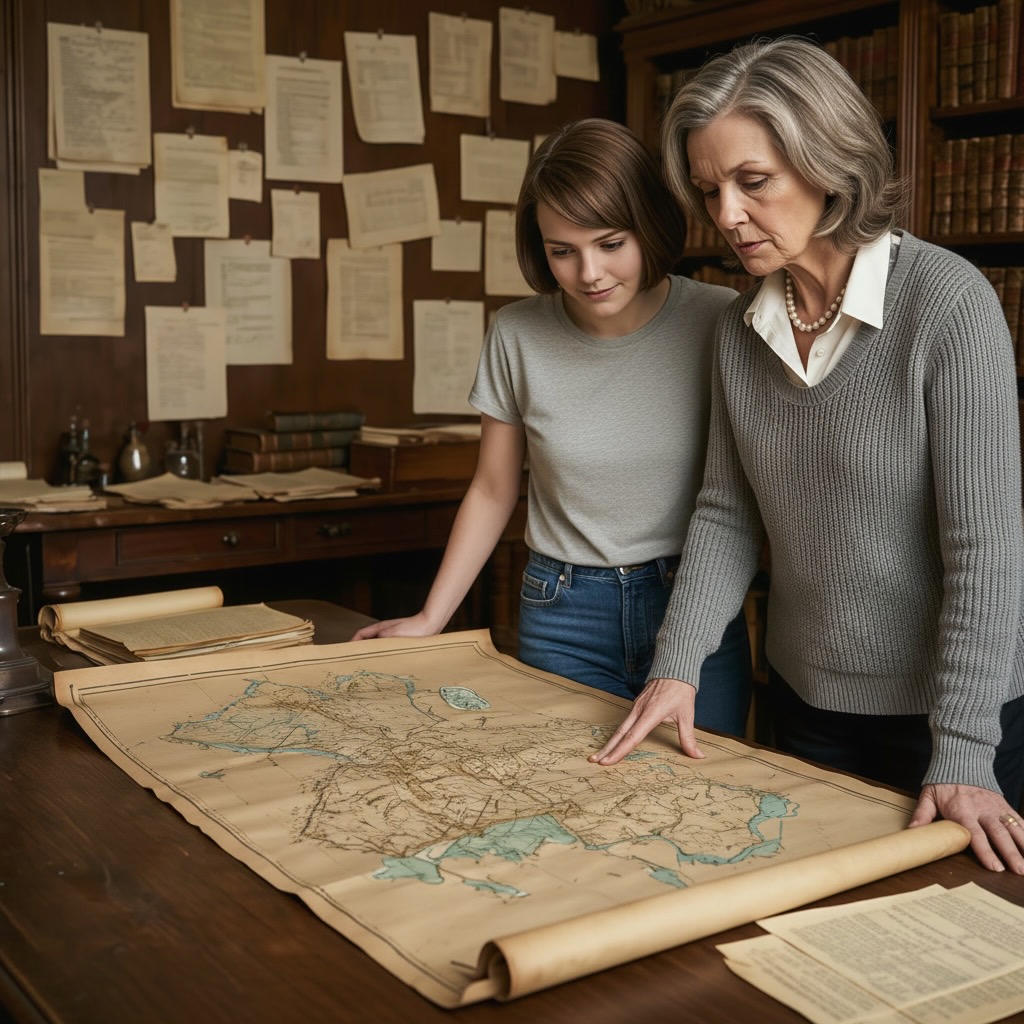

In her Christmas break of her final year at St Teresa’s, Julia returned to her home at Hillside Haven with the kind of poise she’d once envied in other girls. Gone were the nerves that used to tangle her hands when she opened the front gate or the sharp, acidic longing for some recognition of her own belonging. The house—her mother’s fortress of disciplined comfort—felt less like a test and more like a series of puzzles she could now solve in her sleep.
The autumn term had been a blur of practical exams and soft, boozy evenings in the sixth form common room. She’d made herself indispensable to the new head girl within a fortnight, trading tips on navigating the politics of staff for the right to skip assembly and first dibs on the shower. If her reputation had ever been in question, it no longer was; the entire year group understood that Julia Holloway could get things done, provided you made it worth her while.
The only real absence was Fiona’s. She’d gone the summer after upper fifth, her parents whisking her off to a triathlon academy in Spain. Julia had received a single postcard—anodyne, polite, written in Fiona’s spare, perfect block capitals. She still reread it sometimes, searching for some hidden code, but there was nothing. Only, “The roads here are quiet and the sea is warm. Sadly the food is boring. I hope you’re winning.”
So Julia told herself she didn’t care. Or, more precisely, she told herself that whatever she felt about Fiona was just another residual habit, like the way her mind still mapped every exit in a new building, or how she always clocked the faces in a crowd, looking for someone who didn’t fit. It was a survival trait, nothing more.
Hillside Haven had changed very little. The box hedges were trimmed with geometric severity, the gravel drive raked each morning by the same silent gardener. Inside, Charlotte’s influence had grown only more pronounced: the furniture now uniformly Arts and Crafts, the bookshelves a series of obsessively organized verticals. Julia’s room was as she’d left it, minus a few childish artifacts that her mother had quietly consigned to the attic. It took less than an hour to unpack and reestablish the perimeter.

She was almost disappointed by how easy it was to slip back into the old rhythms.
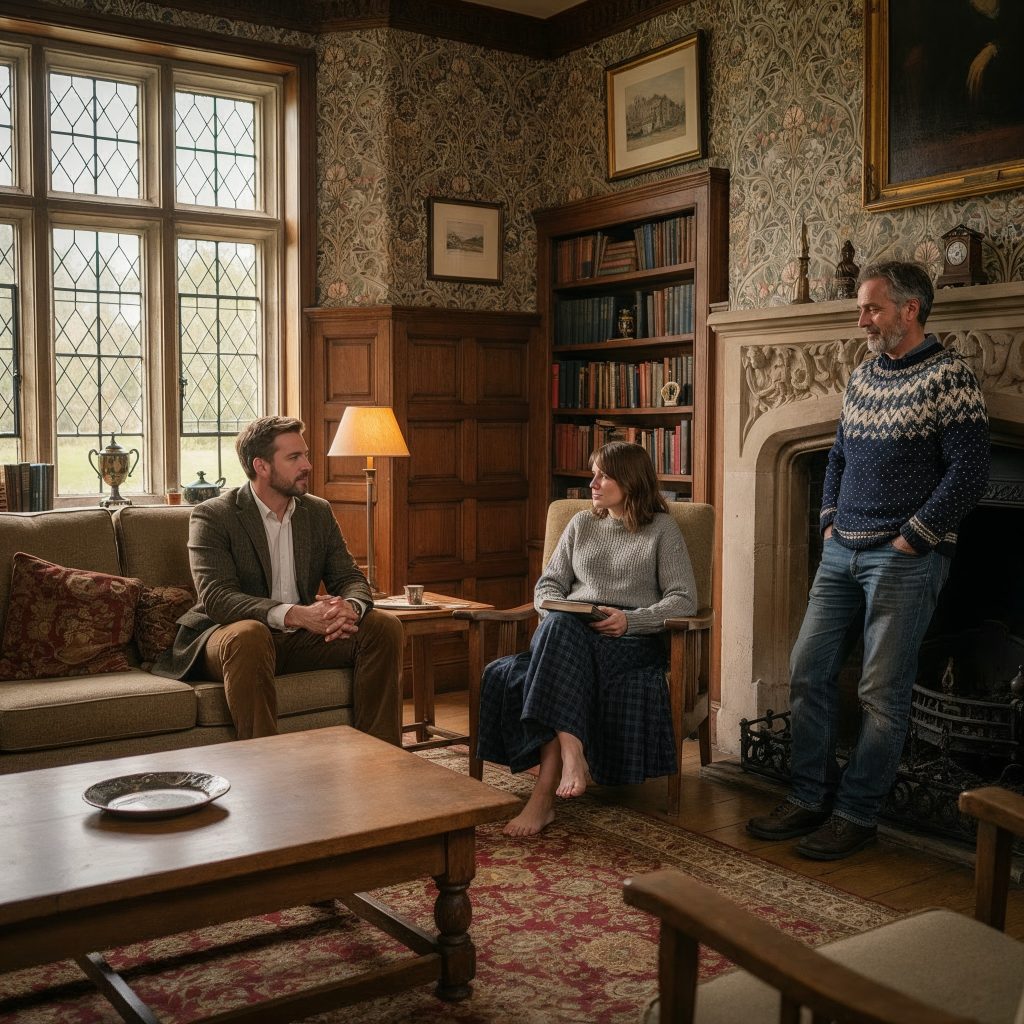
It wasn’t until the evening, when the sound of laughter drifted up from the drawing room, that Julia recognized the true difference: her own appetite for risk. She padded downstairs in stocking feet, pausing just outside the threshold. The air was rich with the aromas of wood smoke and claret and something citrusy—maybe the peel her mother liked to float in the wine.
Charlotte was in her element, perched on the edge of the settee, her legs crossed with a predatory elegance that reminded Julia of a cat waiting for the right moment to pounce. There were four other people in the room: an older man with a waterfall of silvery hair, a woman with librarian glasses and a laugh like a cough, and two younger men whose faces were vaguely familiar from university prospectuses. All eyes were on Charlotte, who held forth with an energy Julia had rarely seen directed at her.
It was a little like watching a bird open its wings for the first time.
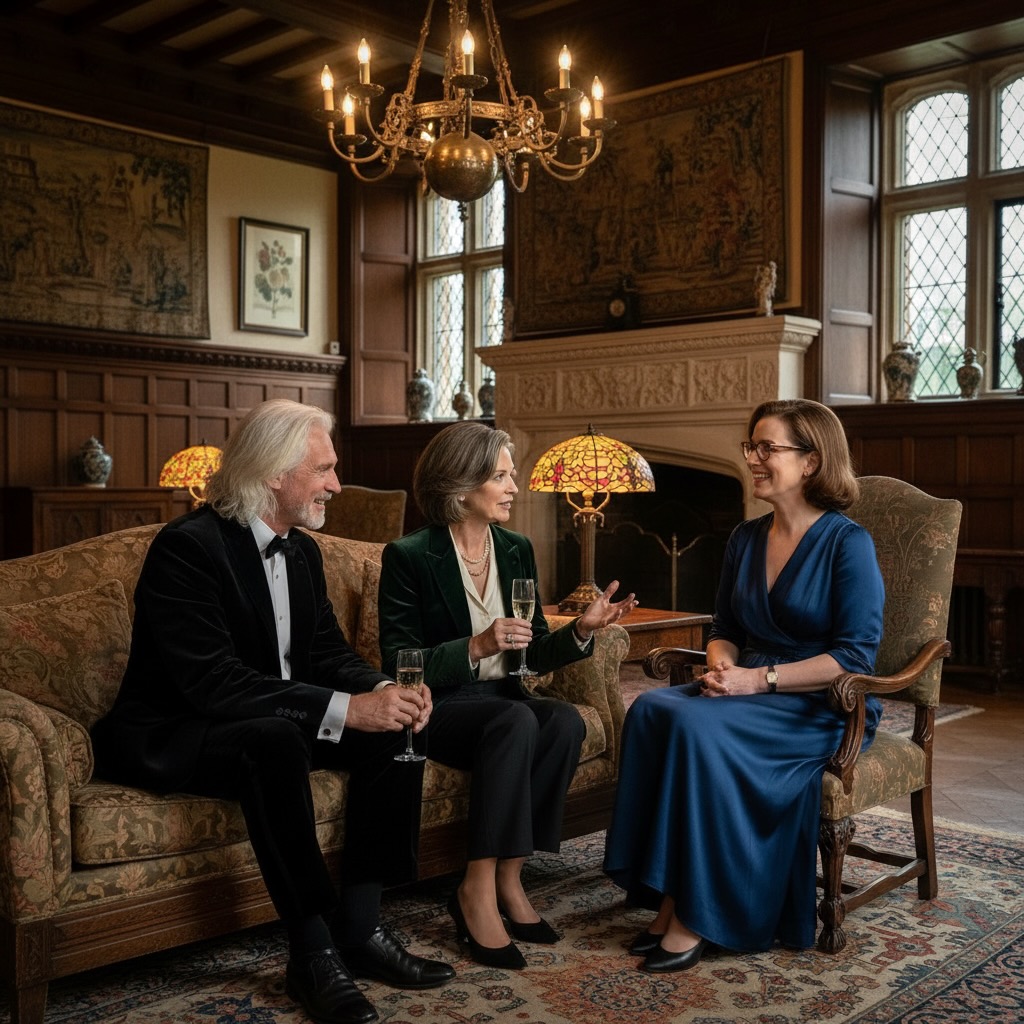
Julia eased herself into the chair by the window, careful not to interrupt the current. She watched her mother—really watched, with the new analytical detachment she’d honed at school. Charlotte’s gestures were precise, calculated; she doled out her smiles with the same care she reserved for grading papers, and her laughter, when it came, was bright but never reckless.
The conversation rolled around the failures of the local council, then through the inexorable slide of the village pub into gastropub mediocrity, and finally into a round of anecdotes about the year’s crop of students. Each story was a miniature morality play: the girl who’d plagiarized a term paper from the internet, the boy whose anxiety was so finely tuned he could distinguish between two brands of printer toner by smell. The group laughed at the right moments, feigned outrage in unison, and generally performed as one does when in the presence of a dominant but benevolent queen.
Julia felt, for the first time, that she might have inherited something from her mother after all.
After the second bottle was opened, Charlotte noticed her daughter in the shadows and beckoned. “Julia, come meet the new blood. I was just telling them about your role in last year’s debate team massacre.”
Julia stood, smoothing her skirt. She adopted the bland, ingratiating smile that had served her so well with the staff at St Teresa’s. “Hello,” she said, making eye contact with each guest in turn.
The librarian woman went first: “You’re the one who ran circles around the Upton team, aren’t you? We heard about that all the way up at the college.”
Julia gave a modest shrug. “They underestimated us.”
Charlotte radiated pride, but with an undercurrent of something more dangerous—competition, maybe. “Julia is very good at seeing patterns other people miss,” she said, fixing her daughter with a sly look. “Sometimes I think she’s wasted on our provincial little patch.”
The silver-haired man smiled, his teeth improbably white. “Not at all. Some of the world’s greatest minds came from places no one’s ever heard of.”
Julia smiled back, cataloguing the phrase for later use.
The group’s attention returned to Charlotte, but now Julia was part of the circuit. She fielded a few questions about her university plans (undecided, but leaning toward psychology), then about her opinions on the looming A-Levels (“I think the entire system is about sorting, not learning”). The younger of the two men—who’d said almost nothing so far—asked what she thought of the current head at St Teresa’s.
“She’s very good at her job,” Julia replied, neutral, but Charlotte caught the subtlety.
“She means Miss Milne is a snake in silk,” Charlotte said, to the laughter of the group.
The talk shifted to departmental drama at the college, and Julia listened, amused by the pettiness of adults. It was almost comforting to know that even in the rarefied world of her mother’s colleagues, the power games were as childish as anything she’d seen at school.
At a lull, Charlotte refilled Julia’s glass with a finger of wine. “You’re very quiet tonight.”
Julia considered her answer. “I like to watch people when they don’t realize it.”
“Dangerous habit,” said the librarian, but she smiled as she said it.
The conversation resumed, now drifting into academic gossip—who’d been poached by which university, who was up for a fellowship, whose research had quietly collapsed under the weight of its own irrelevance. Charlotte, it seemed, was not above enjoying a little schadenfreude.
After an hour, the guests began to drift toward departure, bundling up against the raw edge of night. There was the usual ritual of repeated goodbyes, promises to stay in touch, and the exchange of business cards that would inevitably end up in some forgotten drawer. When the door finally clicked shut behind the last of them, Charlotte sagged visibly, her posture softening for the first time all evening.
Julia hovered in the hallway, watching as her mother gathered stray glasses and straightened the cushions on the settee.
“You were different tonight,” Julia said, careful to keep her tone neutral.
Charlotte glanced up, eyebrow raised. “How so?”
“Louder, I think. Livelier.”
Charlotte made a sound halfway between a laugh and a sigh. “People expect a certain performance. I find it’s easier to give them what they want.”
Julia nodded. “I know the feeling.”
A pause. Then: “You’ve grown up,” Charlotte said, almost accusingly. “I’m not sure when it happened.”
Julia didn’t have an answer for that.
They stood in silence, neither quite willing to break the spell. Julia was acutely aware of the way the house seemed to contract around them, the walls closing in until it was just the two of them, mother and daughter, each waiting for the other to make the next move.
Charlotte broke first. “You should get some sleep. Tomorrow will be busy.”
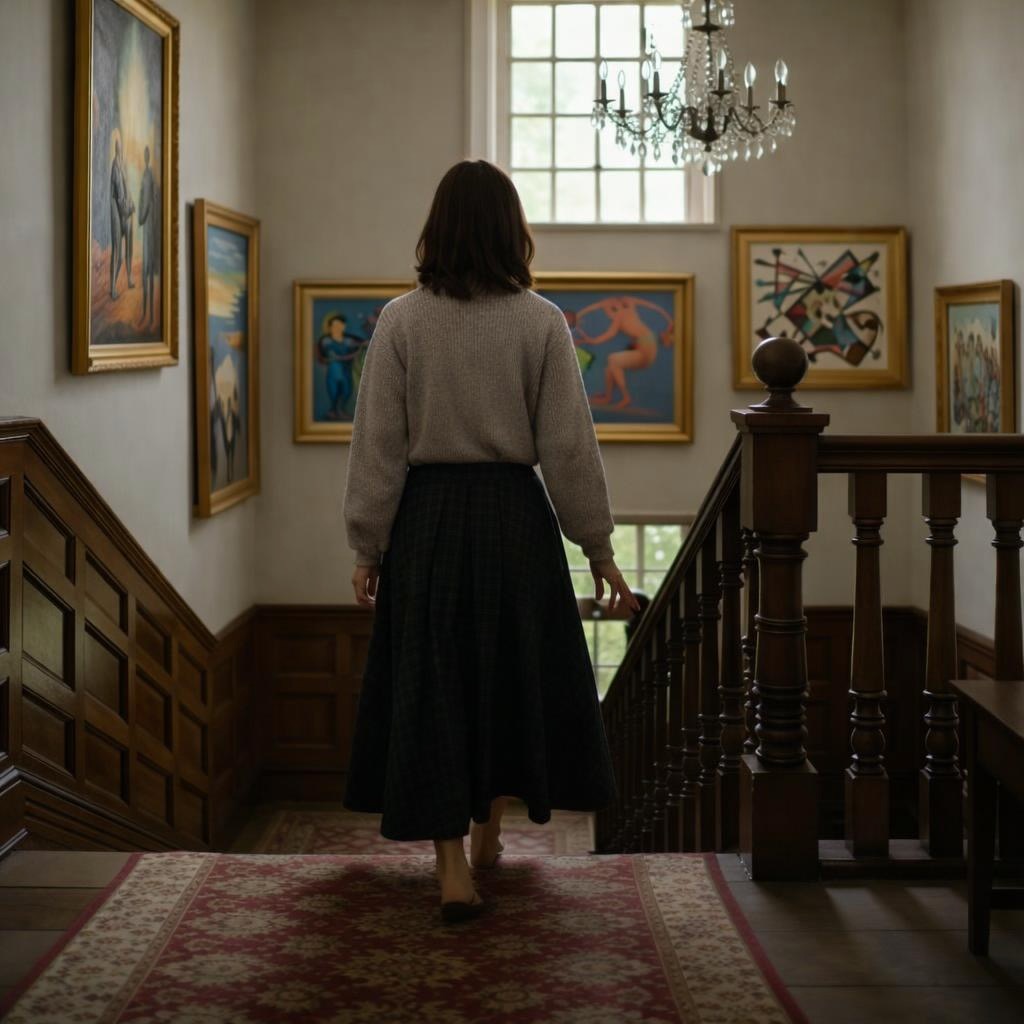
Julia ascended the stairs, the wine warm in her veins, her mind spinning with the possibilities of adulthood. She thought of the guests, of the way her mother’s voice had changed depending on the audience, of the subtle cues she’d picked up and stored away.
For the first time in years, Julia felt something that might have been optimism.
She closed her door, listened to the sounds of her mother moving through the house, and resolved to remember every detail from her encounters. She was, after all, her mother’s daughter.
And in the world to come, she would use everything she’d learned.